
Concrete Maintenance Tips for Texas Homeowners
Concrete Maintenance Tips for Texas Homeowners
Concrete is one of the most durable building materials available — but in Highland Village and across Denton County, the combination of expansive clay soils, extreme heat, and occasional freeze-thaw cycles means concrete needs attention to reach its full potential lifespan. A consistent maintenance routine costs very little and prevents the expensive repairs and replacements that result from neglect.
Here’s a practical, seasonal maintenance schedule for Highland Village homeowners.
Understanding Your Local Conditions
Denton County features expansive clay soils (Blackland Prairie) that can expand up to 10% with moisture changes, causing foundation movement. Hot summers exceed 100°F with high humidity, which speeds concrete curing and creates cracking risk. Cold winters with freeze-thaw cycles require attention to drainage and crack sealing.
These three factors — clay soil movement, summer heat, and occasional winter freezes — drive the maintenance priorities for concrete in Highland Village. Most maintenance activities are inexpensive and take an afternoon. Deferred maintenance turns into repair bills measured in thousands of dollars.
Spring Maintenance (March–May): The Most Important Season
Spring is the highest-priority maintenance window for Denton County concrete. After winter, assess your concrete for any damage caused by freeze-thaw cycles, and complete maintenance tasks before summer heat arrives.
Spring maintenance checklist:
-
Inspect for cracks. Walk your driveway, patio, sidewalks, and pool deck. Note any cracks wider than 1/8 inch. Measure and photograph them to track progression.
-
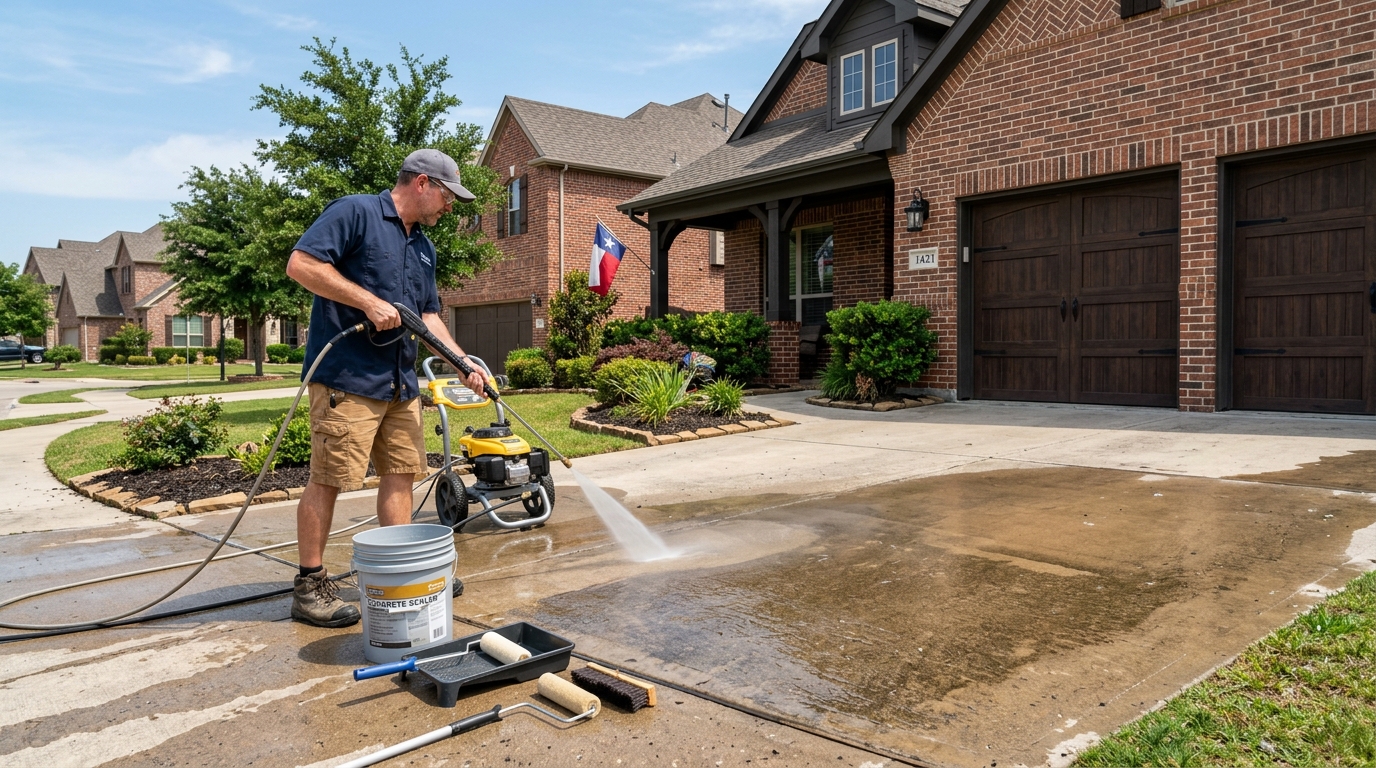
Clean the surface. Wash with a pressure washer (2,000–3,000 PSI) to remove winter dirt, mold, and mildew that may have developed in cool, moist conditions. Allow to dry completely before assessing or sealing.
-
Test your sealer. Pour a small amount of water on the surface. If it beads up, your sealer is still effective. If it soaks in, it’s time to reseal.
-
Reseal if needed. Spring is the ideal time to apply sealer in North Texas. Temperatures in the 60–75°F range allow proper sealer penetration and curing. Apply sealer every 2–3 years in Texas conditions.
-
Repair cracks before summer. Small cracks are easy to fill with polyurethane or epoxy crack filler. Addressing them in spring prevents summer heat from widening them and winter moisture from freezing in them.
-
Check drainage around slab edges. Ensure soil is graded away from concrete edges and that downspouts direct water away from slabs. Poor drainage is the primary driver of the soil expansion-contraction cycle that cracks Highland Village concrete.
Summer Maintenance (June–August): Minimal Work, Important Monitoring
Summer is not the time for major maintenance — the heat makes sealer application difficult and crack work messy. Focus on monitoring.
Summer tasks:
-
Manage moisture near slab edges during drought. When Highland Village experiences extended dry periods, the clay sub-base shrinks and can create voids beneath concrete slabs. Running a soaker hose along driveway and patio edges 2–3 times per week during droughts (especially July and August) prevents dramatic soil shrinkage. This is particularly valuable for concrete that’s 10+ years old.
-
Inspect for new cracking after rain events. The first heavy rain after an extended drought brings rapid soil expansion that can crack or heave concrete. Walk your concrete after significant rainfall following a dry spell.
-
Keep vegetation clear of slab edges. Tree roots in Highland Village’s clay soil are aggressive — they follow moisture, and in summer droughts they seek the soil moisture near and beneath concrete slabs. Roots under concrete cause heaving and cracking.
Fall Maintenance (September–November): Pre-Winter Prep
Fall is the second-best maintenance window of the year, and a critical time to prepare concrete for winter.
Fall maintenance checklist:
-
Seal any open cracks before temperatures drop. Water in unsealed cracks freezes during North Texas cold snaps and expands the crack. Even small cracks should be sealed in October or early November.
-
Reseal if you didn’t reseal in spring. Fall (September–October) is the second-best sealing window. Avoid sealing once temperatures regularly drop below 50°F, as most sealers don’t cure properly in cold weather.
-
Clear debris from expansion joints. Leaves, dirt, and debris that pack into control joints prevent them from functioning correctly and trap moisture.
-
Check for tree root damage near slabs. Fall is a good time to assess root encroachment and plan for root barrier installation or tree removal if concrete damage is occurring.
Winter Maintenance (December–February): Protection
Highland Village winters are mild but not negligible. Six to ten cold days per year can cause damage to concrete that’s cracked, worn, or unsealed.
Winter tips:
-
Never use rock salt or chemical deicers. These cause rapid surface spalling and are far more damaging than cold temperatures alone. Use sand for traction on icy surfaces.
-
Remove standing water promptly. Water sitting on concrete during a freeze event is more damaging than water that has drained away. Ensure drains are clear.
-
Don’t pressure wash in freezing conditions. Water forced into concrete pores before a freeze causes surface damage.
Annual Repair Priorities
Beyond seasonal maintenance, keep an eye on these repair triggers:
- Any crack wider than 1/4 inch: seal or fill immediately
- Sections that have shifted more than 1/4 inch vertically: evaluate for leveling
- Spalling affecting more than 15–20% of the surface: consult on resurfacing options
For anything beyond basic crack sealing and cleaning, professional concrete repair services can assess whether repair or partial replacement is the right move.
Contact Highland Village Concrete today for a free estimate. Call (888) 376-0955 or reach out online.