
Stamped Concrete Patio Cost in Highland Village, TX
Stamped Concrete Patio Cost in Highland Village, TX
A stamped concrete patio gives your outdoor space the look of natural stone, brick, or wood at a fraction of the cost — and with far less maintenance. If you’re planning a patio project in Highland Village, here’s what you need to know about pricing, patterns, and the local factors that affect your final cost.
What Does Stamped Concrete Cost in Highland Village?
In the DFW area, stamped concrete patios run $12 to $20 per square foot installed. For a typical Highland Village patio, here’s how the math works out:
| Patio Size | Estimated Cost |
|---|---|
| 200 sq ft (small) | $2,400–$4,000 |
| 400 sq ft (medium) | $4,800–$8,000 |
| 600 sq ft (large) | $7,200–$12,000 |
| 800+ sq ft (premium) | $9,600–$16,000+ |
These figures include site preparation, forming, concrete pour, stamping, integral color or release color, and a basic sealer coat. Labor in DFW runs $4–$10 per square foot, and material costs are currently $115–$152 per cubic yard, reflecting the 2025 market in Denton County.
Complex multi-pattern layouts, premium aggregate mixes, and multiple color layers push costs toward the higher end. Simple single-pattern pours fall closer to $12–$14 per square foot.
Popular Stamped Patterns for Texas Patios
Pattern selection is mostly aesthetic, but some choices hold up better in the Texas climate than others:
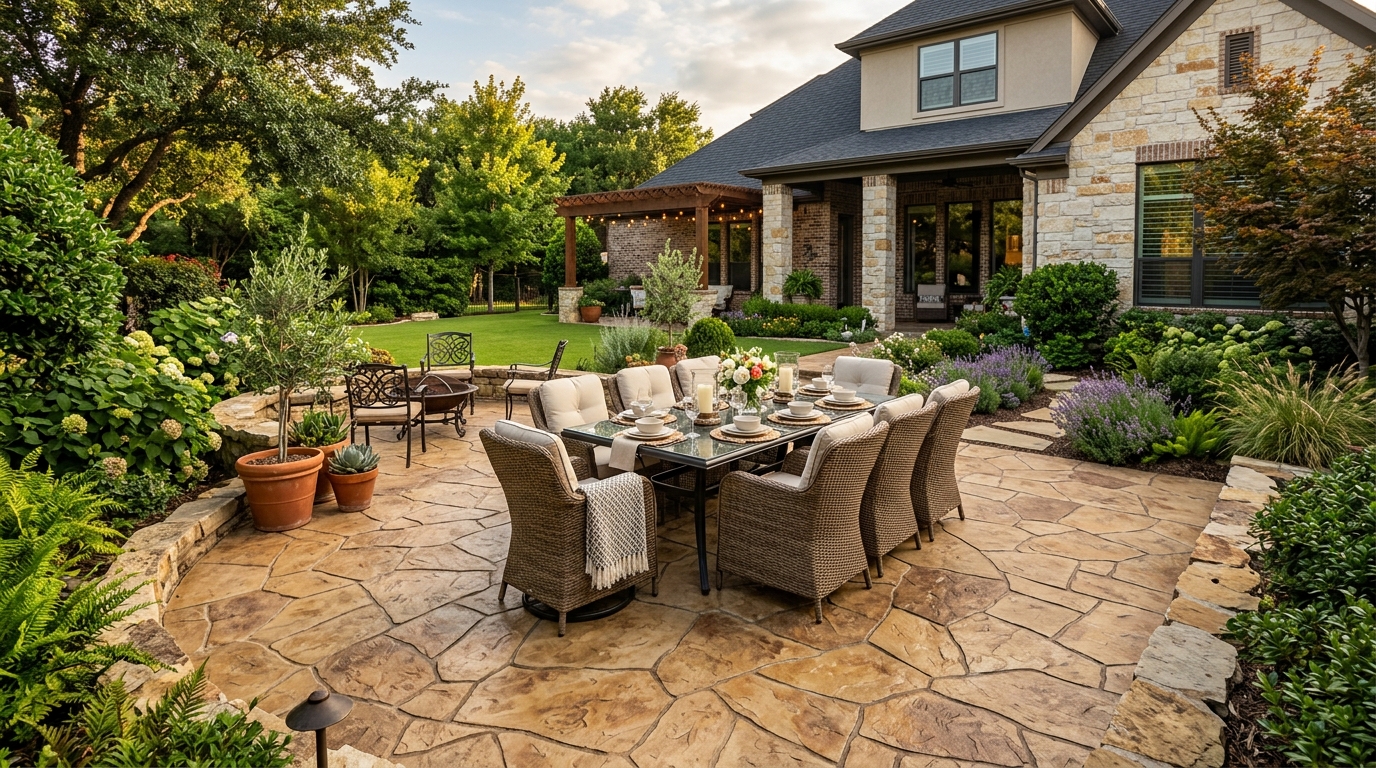
Flagstone is the most popular choice in Highland Village. The irregular, organic shapes mimic natural stone and work with most home styles — from traditional to contemporary. The varied surface texture also provides good traction even when wet.
Ashlar Slate features clean, rectangular cuts that give a more formal, geometric look. It’s popular in newer construction and modern homes near Castlewood and Highland Shores.
Cobblestone adds old-world character to driveways and entry patios. The rounded impressions create natural channels for water runoff — a practical advantage in North Texas.
Wood Plank patterns have grown in popularity as homeowners look for the warmth of wood without the upkeep. Realistic grain textures are available in warm browns and grays.
Random Stone or Tennessee Crab Orchard patterns work well for pool decks and large entertainment areas where you want visual interest without a rigid geometric pattern.
Color Options That Hold Up in Texas Heat
Color choice matters in Highland Village’s climate. Summer temperatures routinely exceed 100°F, and a dark stamped concrete patio will absorb significantly more heat than a lighter one — uncomfortable for bare feet and hard on the sealant.
Integral color (pigment mixed into the concrete) is the most durable option. Because the color runs through the entire slab, chips and surface wear don’t expose gray concrete beneath. Popular integral colors for Texas homes include buff, sandstone, adobe, and warm gray.
Color hardener or release agent is broadcast on the surface during stamping to add depth and highlight the pattern. A contrasting release color — like a dark brown over a tan base — creates the most realistic stone appearance.
For North Texas, lighter base colors (buff, sandstone, natural) are practical as well as attractive. They reflect heat rather than absorbing it, stay cooler underfoot, and show less fading over time.
Why Sub-Base Prep Is Critical in Denton County
Denton County sits on Blackland Prairie — expansive clay soils that can expand up to 10% with moisture changes. This soil movement is the leading cause of cracked and heaved patios in the Highland Village area. Proper stamped concrete installation on clay soil requires:
- Compacted granular base material (typically 4–6 inches of crushed limestone)
- Moisture barrier or lime stabilization for severely expansive soils
- Proper control joint placement every 8–12 feet to manage expansion cracks
- Adequate drainage to prevent water from pooling at slab edges
Cutting corners on sub-base preparation is the most common reason stamped concrete fails within a few years. A properly prepared base costs more upfront but is the difference between a 30-year patio and one that cracks in five.
Best Time to Pour a Stamped Patio in Highland Village
Timing affects both the quality of the finished product and your project schedule. Spring (March–May) and fall (September–November) are the ideal seasons for concrete work in North Texas, with temperatures in the 50–70°F range that allow for controlled curing and precise stamping.
Summer pours (May–September) require accelerated working schedules — concrete sets faster in 90°F+ heat, leaving less time to stamp and finish. Experienced contractors can manage summer pours, but they require more crew coordination and careful mix design.
Winter pours (December–February) are possible but require concrete blankets to maintain proper curing temperatures. Six to ten cold days per year in Highland Village may force pour cancellations when temperatures drop below 40°F.
If you have flexibility, scheduling your project for late March through May or September through October gives you the best conditions and often the best contractor availability.
What’s Included in a Stamped Concrete Quote?
When comparing quotes from contractors in the Highland Village area, make sure each one includes:
- Sub-base preparation and compaction
- Forming and layout
- Concrete materials (specified psi and mix design)
- Stamping and color application
- Control joint cutting
- Initial sealer application
- Cleanup and haul-away
Some contractors quote low and add charges for color, sealing, or demolition of existing concrete. Get itemized quotes and ask specifically what’s excluded.
For more on your stamped concrete and decorative options, visit our service page.
Contact Highland Village Concrete today for a free estimate. Call (888) 376-0955 or reach out online.