
Signs Your Concrete Driveway Needs Repair (Don't Ignore These)
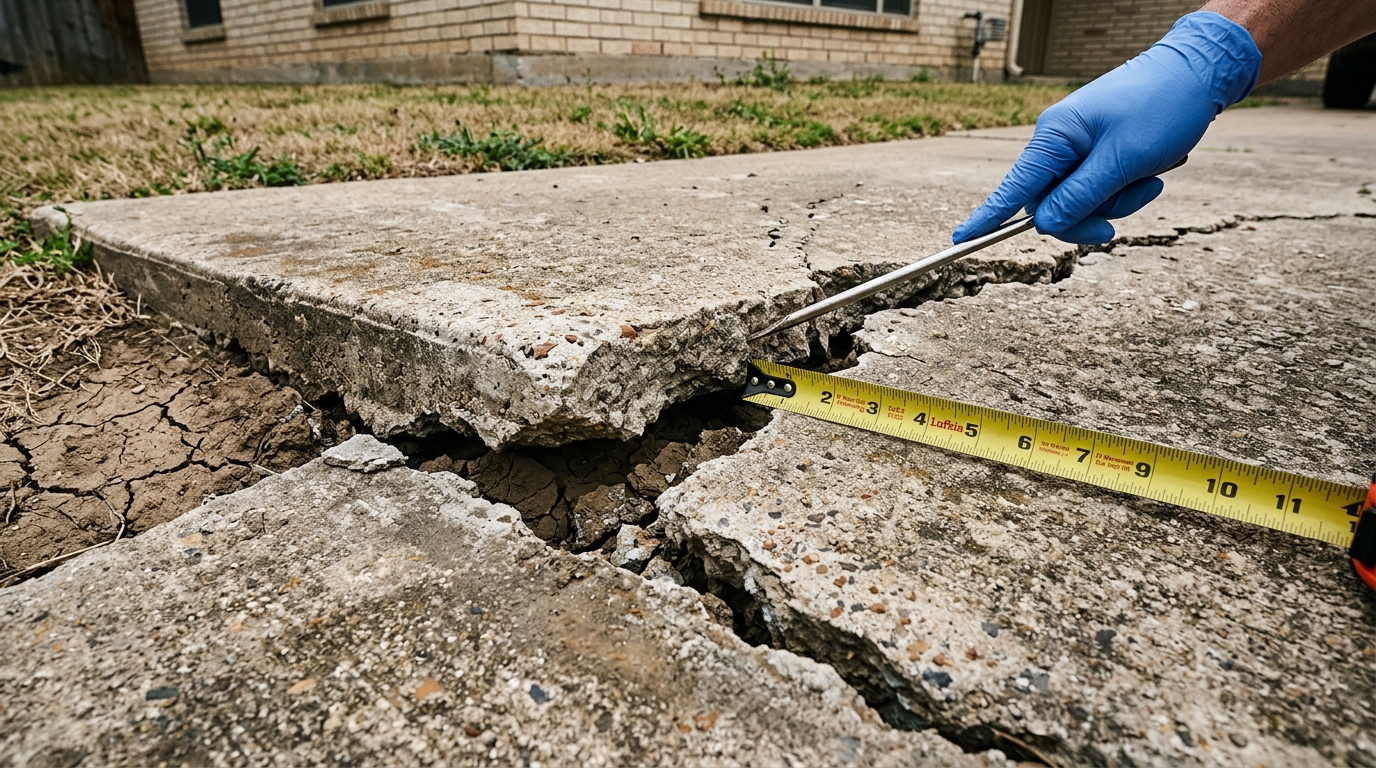
Signs Your Concrete Driveway Needs Repair (Don’t Ignore These)
In Highland Village, concrete driveways face a specific set of challenges that most of the country doesn’t: Blackland Prairie clay soils that expand and contract with every rain and drought cycle, summer heat above 100°F, and occasional winter freeze events. These conditions produce recognizable damage patterns — and catching them early keeps repair costs manageable.
Here’s what to look for and when to take action.
1. Wide Cracks from Soil Movement
Not all cracks are equal. Hairline cracks (under 1/8 inch) are normal in any concrete slab and rarely indicate a structural problem. Cracks wider than 1/4 inch are a warning sign that should be evaluated by a professional.
In Denton County, wide cracks most often result from soil movement beneath the slab. When Highland Village’s expansive clay dries during drought, it shrinks and pulls away from the underside of the concrete, creating voids. The unsupported slab then deflects under traffic and cracks. When the rains return and clay expands, those cracks can widen further.
What to look for:
- Cracks that run diagonally from corners (classic clay soil stress pattern)
- Cracks that are wider at one end (indicating differential soil settlement)
- Cracks that have grown since you last noticed them
2. Heaving: Sections Pushed Up
Heaving is the opposite of settling — one section of the driveway rises higher than adjacent sections, creating a raised edge or ridge. In North Texas, heaving is almost always caused by moisture expansion in the clay sub-base.
Heaved sections create trip hazards and are tough on vehicle suspensions. More importantly, they indicate that the sub-base moisture conditions are actively working against your slab. If the heave is severe (more than 1/2 inch of vertical difference), or if it’s progressing, it needs professional attention.
Mudjacking or foam leveling can sometimes correct mild heaving, but severe cases — where the soil movement is ongoing — may require removing and repaving the affected section with proper sub-base preparation.
3. Settling and Sunken Sections
Settled sections are the inverse of heaving. When clay sub-base dries and shrinks, or when soil was improperly compacted during installation, sections of the driveway sink lower than the surrounding concrete.
Sunken sections pool water, which accelerates the clay expansion-contraction cycle and leads to additional cracking and settling. A driveway with multiple sunken sections is telling you the sub-base has failed in those areas.
Repair options for settling:
- Mudjacking: Pumping a cement-soil slurry under the slab to raise it. Cost: $3–$8 per square foot.
- Foam leveling (polyurethane lifting): Injecting expanding foam to raise and stabilize the slab. Similar cost to mudjacking, often faster.
- Section replacement: For severely settled areas, removing and replacing the affected section on a properly compacted sub-base is often the most durable fix.
4. Surface Spalling
Spalling refers to surface flaking or scaling — the top layer of the concrete breaking away in flakes or chunks. In Highland Village, spalling typically results from:
- Freeze-thaw damage: Water trapped in the surface pores freezes, expands, and pops off surface concrete
- Chemical deicers: Rock salt and chemical ice melts are devastating to concrete surfaces and cause rapid spalling
- Improper curing: Concrete that dried too fast during a summer pour is more prone to surface scaling
Spalling that covers less than 20–25% of the surface can often be addressed with concrete resurfacing or overlays, which cost $4–$10 per square foot. More extensive spalling — especially if it’s deep — typically warrants full replacement.
5. Joint Deterioration
The control joints in your driveway (the straight lines cut into the surface every few feet) are designed to control where cracking occurs. When joint edges start to crumble, chip, or break away, it’s called joint spalling or edge deterioration.
This is common in Highland Village driveways that were installed without a proper sealer schedule. Water infiltrates the joint, clay below the joint cycles with moisture, and the joint edges eventually crumble. Addressing joint deterioration promptly — with joint sealing or repair — prevents the damage from spreading into the main slab.
When to Repair vs. Replace
Consider repair when:
- Cracks are limited and under 1/2 inch wide
- Settlement affects one or two isolated sections
- Spalling covers less than 25% of the surface
- The driveway is under 20 years old and the sub-base is sound
Consider replacement when:
- Cracking is widespread across multiple sections
- Multiple areas have both settled and heaved (indicating system-wide sub-base failure)
- The driveway is 30+ years old with significant structural deterioration
- Repair costs approach 50% or more of replacement cost
DFW concrete installation runs $8–$12 per square foot for a basic driveway replacement. For most Highland Village driveways, a full two-car driveway replacement costs $3,200–$7,200 depending on size and finish.
For professional concrete repair and evaluation, our team can assess your specific situation and give you honest options.
Contact Highland Village Concrete today for a free estimate. Call (888) 376-0955 or reach out online.