
Concrete Slabs: Garage, Shed & Foundation Pads in Denton County
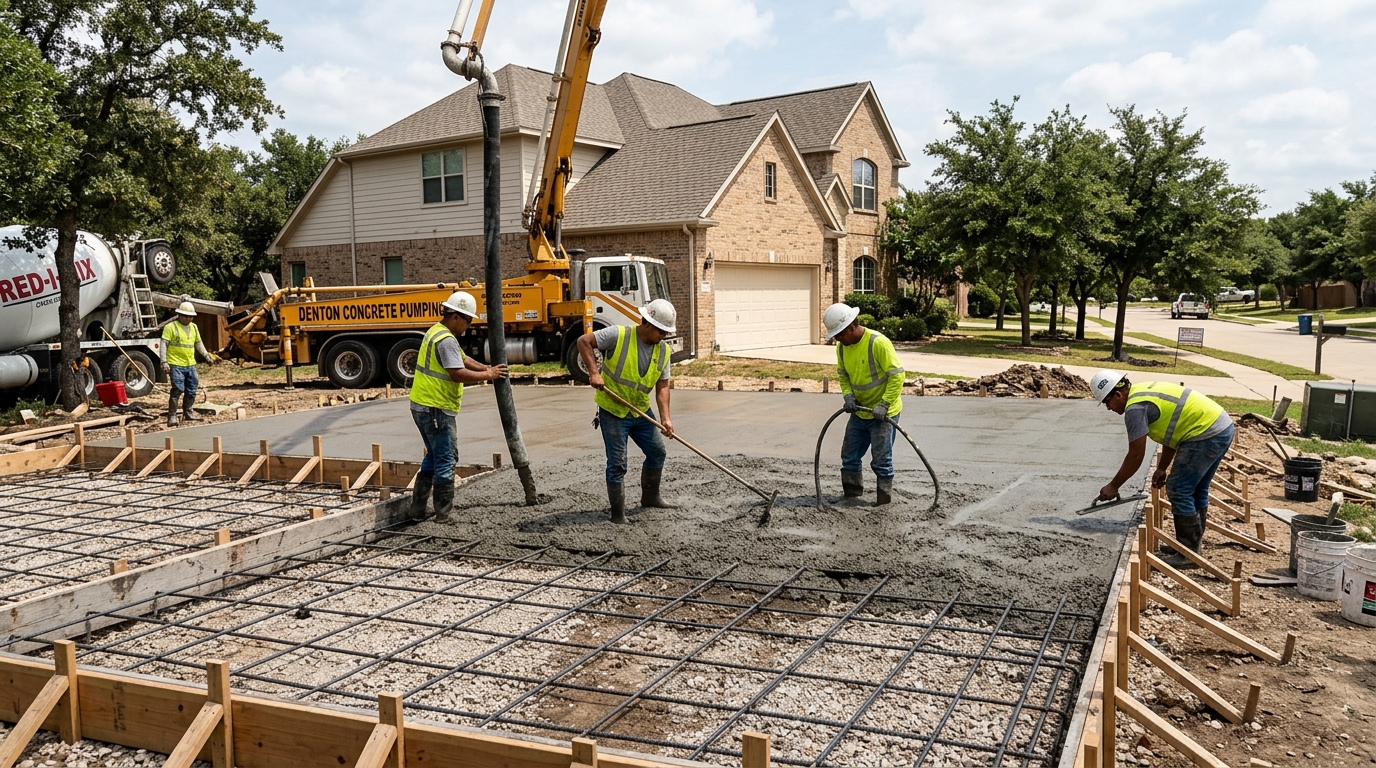
Concrete Slabs: Garage, Shed & Foundation Pads in Denton County
Whether you’re building a new garage, putting in a workshop, pouring a shed pad, or adding an accessory structure to your Highland Village property, the concrete slab is the foundation everything else depends on. In Denton County’s challenging soil environment, getting the slab right requires understanding local conditions that don’t apply in most of the country.
Here’s a practical guide to concrete slabs for residential and light commercial use in North Texas.
Types of Concrete Slabs
Garage Floor Slabs A garage floor slab is one of the most common concrete projects in Highland Village. Standard residential garage slabs are poured at 4 inches thick for typical passenger vehicles. For garages that will store heavier vehicles — RVs, boats, work trucks — 6 inches is recommended and significantly reduces cracking risk under concentrated loads.
Garage slabs should include:
- Perimeter thickening (called a turned-down or grade beam edge) for stability
- Rebar or welded wire reinforcement throughout
- Vapor barrier (6-mil poly minimum) between the sub-base and slab
- Properly spaced control joints to manage cracking
Shed and Accessory Structure Pads A standard residential shed pad is typically 4 inches thick and sized to match or slightly exceed the footprint of the structure. Shed pads don’t usually require engineering unless the structure itself triggers permit requirements (over certain square footage or with plumbing/electrical).
Even small shed pads in Highland Village benefit from proper sub-base preparation. The Blackland Prairie clay beneath Denton County properties will move with moisture changes regardless of the slab’s size. A 100 square foot shed pad on unprepared clay will crack and shift. The same pad on 4 inches of compacted crushed limestone will remain stable for decades.
Foundation Pads for Equipment and Generators Concrete pads for HVAC equipment, generators, pool equipment, and similar installations are typically 4–6 inches thick depending on equipment weight. These pads usually require precise leveling and sometimes anchor bolt placement for equipment attachment.
Generator pads in particular are increasingly common in Highland Village as homeowners add standby power capacity. Pad sizing is specified by the generator manufacturer and typically requires the pad to extend several inches beyond the generator footprint on all sides.
Why Vapor Barriers Are Critical in Highland Village
Denton County’s clay soils are not just expansive — they’re also moisture-retentive. Clay holds water far longer than sandy or loamy soils, and that moisture slowly migrates upward through concrete slabs by capillary action. In a garage or workshop, this means:
- Efflorescence (white salt deposits) on the surface
- Damp floors that promote mold and mildew
- Adhesion failures for epoxy coatings and flooring materials applied over the slab
- Accelerated deterioration of the concrete surface
A polyethylene vapor barrier (6-mil minimum, 10-mil preferred) placed between the compacted sub-base and the slab interrupts this moisture migration. The barrier costs very little and prevents problems that are expensive to fix after the fact.
For garages being converted to conditioned spaces (workshops, home gyms, hobby rooms), a 10–15 mil vapor barrier is worth the upgrade.
Rebar vs. Wire Mesh: What’s Right for Your Slab?
Welded Wire Mesh (WWM) has been the traditional reinforcement for residential slabs. It’s cost-effective and provides adequate reinforcement for standard residential applications. One limitation: wire mesh must be properly elevated in the pour (supported by chairs or dobies) to be effective. Mesh left on the sub-base at the bottom of the slab contributes almost nothing structurally.
Rebar (Deformed Steel Reinforcing Bar) provides superior crack control and structural performance. For garage slabs expected to carry heavy vehicles, or for any slab on Denton County’s expansive clay soil, #3 or #4 rebar on 18-inch centers is a worthwhile upgrade over wire mesh.
Fiber Reinforcement (polypropylene fibers added to the mix) reduces plastic shrinkage cracking during curing and is a standard upgrade for Texas slabs. It doesn’t replace structural rebar but adds an additional layer of crack resistance for $0.50–$1.00 per square foot.
Pricing for Concrete Slabs in Denton County
DFW concrete installation runs $4–$10 per square foot for labor, with materials running $115–$152 per cubic yard. For complete slab projects:
| Slab Type | Typical Range |
|---|---|
| Basic shed pad (100–200 sq ft) | $700–$2,000 |
| Standard garage slab (400–600 sq ft) | $2,500–$6,000 |
| Workshop/large garage (600–900 sq ft) | $4,000–$9,000 |
| Equipment/generator pad | $400–$1,200 |
Costs vary based on sub-base conditions, access, reinforcement choice, and finish type. Slabs requiring lime stabilization of severely expansive clay will run higher.
Permits for Concrete Slabs in Highland Village
Structural concrete work in Highland Village requires permits through City of Highland Village Building Inspections. For slab projects:
- Standalone shed pads: Typically no permit required for small accessory structure pads, but confirm with the city based on the overall structure size and type.
- Garage slabs for new or expanded garages: Permit required as part of the overall structure permit.
- Generator and equipment pads: Usually no permit for standalone pads, but electrical connections to the equipment require electrical permits.
- Any slab attached to or supporting a structure: Engineered plans with a Texas PE seal are typically required.
When in doubt, a quick call to the City of Highland Village Building Inspections Department (or having your contractor make that call) before starting work avoids problems later.
For driveway and slab installation throughout Denton County, our team handles sub-base evaluation, permit coordination, and quality installation built for Highland Village’s soil conditions.
Contact Highland Village Concrete today for a free estimate. Call (888) 376-0955 or reach out online.