
How to Protect Concrete from Texas Heat, Humidity, and Weather
How to Protect Concrete from Texas Heat, Humidity, and Weather
Texas is one of the harshest environments for concrete in the country. Highland Village homeowners deal with summer temperatures exceeding 100°F, high humidity, clay soils that move with every rain and drought cycle, and occasional freeze-thaw events in winter. Understanding these threats — and taking basic protective steps — is the difference between concrete that lasts 40 years and concrete that cracks in 10.
The #1 Threat: Denton County’s Expansive Clay Soil
Denton County features expansive clay soils (Blackland Prairie) that can expand up to 10% with moisture changes, causing foundation movement. This soil behavior is the leading cause of cracked, heaved, and settled concrete throughout the Highland Village area — more damaging than heat, UV, or freezing combined.
When it rains, the clay expands and pushes up against the underside of your slab. When drought conditions dry the soil out, it shrinks and pulls away, leaving voids beneath the concrete that cause settling and cracking. This cycle repeats dozens of times per year.
How to protect against clay soil movement:
-
Maintain consistent soil moisture at slab edges. During extended drought periods, running a soaker hose along the perimeter of your driveway or patio 2–3 times per week prevents the dramatic shrinkage that creates voids under the slab. This is especially important for older concrete in Lakewood, Castlewood, and other Highland Village neighborhoods with mature landscaping.
-
Control runoff drainage. Water that pools against or under concrete edges accelerates the expansion-contraction cycle. Ensure your gutters, downspouts, and yard drainage direct water away from slabs, not toward them.
-
Don’t let large trees overhang or grow close to slabs. Tree roots in expansive clay soil are particularly aggressive — roots seek moisture, and the soil movement they cause can crack concrete within a few years of planting.
Sealing: Your Concrete’s Best Defense
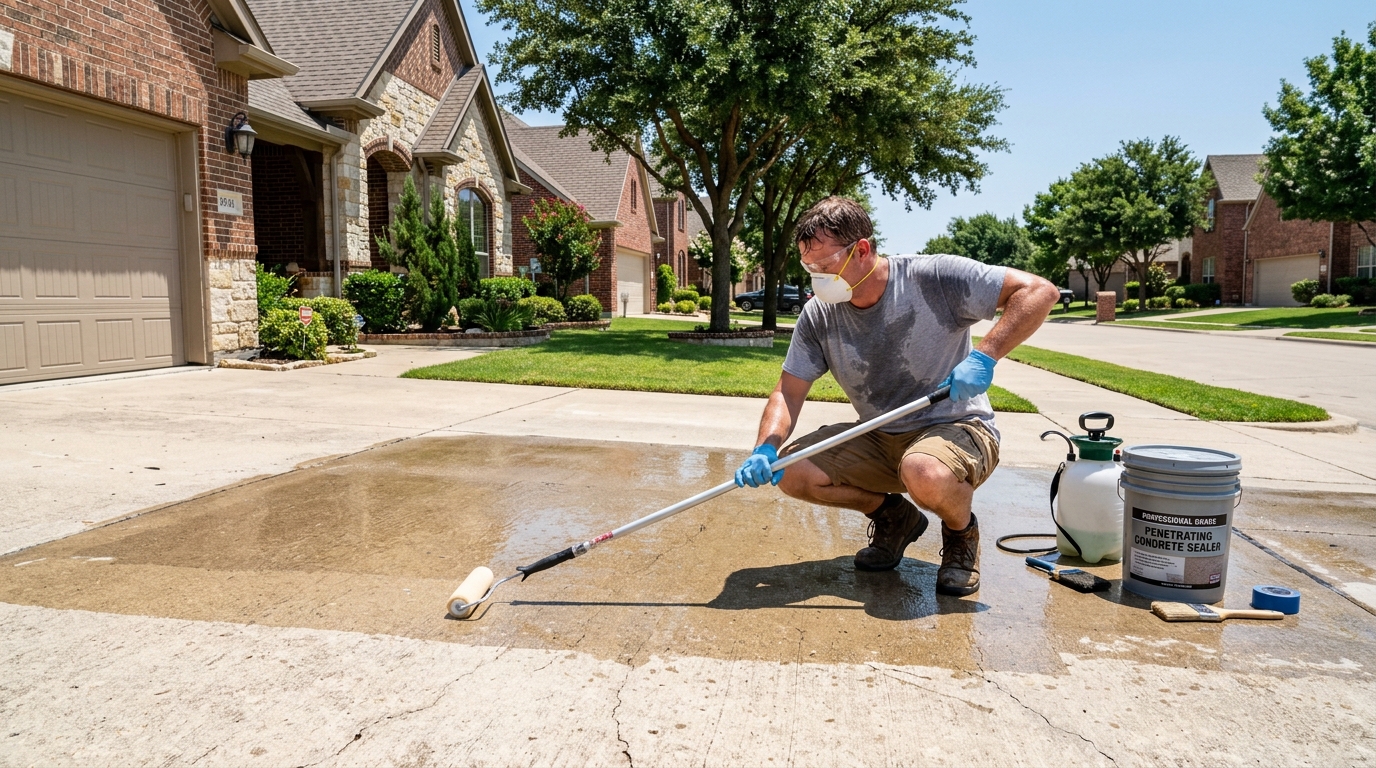
Concrete is porous. Without a sealer, water, oils, UV rays, and Texas-specific threats like caliche dust work into the surface and accelerate deterioration. In the DFW climate, concrete should be sealed every 2–3 years rather than the 3–5 year schedule common in cooler, less harsh climates.
What sealing does:
- Blocks water infiltration that causes freeze-thaw damage in winter
- Resists oil and chemical stains on driveways
- Slows UV degradation that dulls and fades the surface
- Reduces moisture intrusion at slab edges, limiting the soil expansion cycle beneath
A sealer that’s worn thin or missing entirely is one of the most common causes of premature concrete failure in Highland Village. If your driveway or patio hasn’t been sealed in 3+ years, inspect it. If water no longer beads on the surface, it’s time to reseal.
Professional sealing costs $0.50–$1.50 per square foot depending on the product and condition of the concrete. It’s one of the most cost-effective maintenance investments available.
Protecting Concrete from Texas Summer Heat
Hot summers exceed 100°F with high humidity, which speeds concrete curing and creates cracking risk — particularly during the first days after a new pour. But for existing concrete, the primary summer threats are UV degradation of sealers and thermal expansion.
Summer protection tips:
- Don’t water your lawn by letting sprinklers hit concrete directly. Repeated wetting and drying cycles from irrigation accelerate sealer breakdown.
- Inspect sealers in April before summer heat peaks. Resealing in spring rather than summer gives the sealer time to cure properly in moderate temperatures.
- Avoid placing heavy equipment on fresh summer pours. Even sealed concrete needs 7–10 days of full curing before heavy vehicle traffic.
Winter: Avoiding Freeze-Thaw Damage
Highland Village experiences 6–10 cold days annually where temperatures drop low enough to stress concrete. While North Texas winters are mild compared to northern states, freeze-thaw cycles still cause damage — particularly to concrete that’s already showing surface spalling or crack damage.
Winter protection tips:
- Never use rock salt or chemical deicers on concrete. These are devastating to concrete surfaces — they draw moisture in and accelerate spalling. Use sand for traction instead.
- Ensure cracks are sealed before winter. Water in open cracks freezes, expands, and widens the crack. Even small cracks should be repaired in fall before temperatures drop.
- Keep drainage clear. Ice dams that force water under concrete edges cause more winter damage than direct cold.
When to Call for Concrete Repair
Despite good maintenance, Denton County’s clay soils create conditions that eventually require professional attention. Call for a repair evaluation if you see:
- Cracks wider than 1/4 inch
- Sections that have risen or settled more than 1/2 inch
- Surface spalling over more than 20% of the area
- Soft spots or hollow sounds when you tap the surface
Small repairs addressed promptly are far less expensive than full slab replacement. Crack filling runs $3–$6 per linear foot; mudjacking or foam leveling for settled sections runs $3–$8 per square foot — a fraction of full replacement costs.
Contact Highland Village Concrete today for a free estimate. Call (888) 376-0955 or reach out online.